
The Ultimate Guide to Case Opening: Mechanics, Odds, and Strategy
Digital economies have evolved dramatically over the past two decades, giving rise to virtual marketplaces where cosmetic items, skins, and collectibles hold significant real-world value. At the center of this multi-million-dollar phenomenon is case opening. Whether popularized by tactical shooters like Counter-Strike or collectible card and loot-box mechanics in various RPGs, case opening has become a massive subculture.
For the uninitiated, the process seems simple: buy a virtual key, unlock a digital container, and receive a random item. However, beneath the surface lies a complex interplay of probability, psychology, marketplace economics, and platform regulations. This comprehensive guide explores the mechanics behind case opening, the mathematics of odds, economic considerations, and strategies for navigating virtual inventories safely.
What is Case Opening?
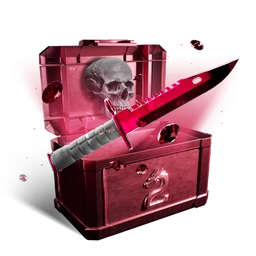
Case opening is a mechanic where a user expends in-game currency, platform funds, or cryptographic tokens to unlock a randomized loot container. Originating primarily in Valve’s Team Fortress 2 and later exploding in popularity with Counter-Strike: Global Offensive (now CS2), the concept has expanded to numerous third-party websites, mobile games, and blockchain platforms.
When a case is opened, a visual roulette-style animation typically plays, cycling through dozens of potential items before landing on a single reward. The item’s rarity and aesthetic appeal dictate its desirability within the community and, consequently, its market value.
Key Terminology
- Case / Crate: The locked digital container holding virtual items.
- Key: The consumable item required to unlock a specific case.
- Drop Rate: The statistical probability of receiving an item of a specific rarity tier.
- StatTrak / Wear Condition: Attributes in games like Counter-Strike that track kills or determine the visual degradation of a skin, drastically impacting its value.
The Mathematics of Case Opening: Understanding the Odds
To the casual observer, case opening appears to be a pure test of luck. In reality, it is strictly governed by mathematical probability. Game developers and regulated platforms utilize Randomized Number Generator (RNG) algorithms to determine outcomes.
While exact odds can vary depending on the specific game or platform, industry standards generally follow a tiered rarity structure. Understanding these probabilities is essential for anyone participating in the ecosystem.
General Item Rarity and Estimated Drop Rates
| Rarity Tier | Description | Estimated Drop Rate | Market Value Implication |
|---|---|---|---|
| Consumer / Common | Basic items, very frequently dropped. | ~79.9% | Minimal value; often used in trade-ups. |
| Industrial / Uncommon | Slightly superior to common items. | ~15.9% | Low value. |
| Mil-Spec / Rare | Standard rare drops with distinct designs. | ~3.2% | Modest value. |
| Restricted / Mythical | Noticeably better aesthetics and lower frequency. | ~0.64% | Moderate to high value. |
| Classified / Legendary | Highly sought-after items with intricate designs. | ~0.13% | High value. |
| Covert / Ancient | Top-tier standard items within a case. | ~0.026% | Very high value. |
| Special / Exceedingly Rare | Ultra-rare items (e.g., Knives, Gloves, Arcana). | ~0.26% (Total) | Premium value, often hundreds or thousands of dollars. |
Note: The exact percentages can fluctuate based on specific series releases, game updates, and platform implementations.
The Economic Ecosystem: Official Markets vs. Third-Party Sites
The allure of case opening is heavily tied to the secondary market. Because virtual items can often be traded, sold, or gambled, a robust digital economy has formed around them.
Official Platforms
In games managed by major publishers like Valve, cases and keys are tied to closed ecosystems (such as the Steam Community Market). Transactions are restricted to platform currency, which cannot legally be converted back into fiat cash directly through official channels without utilizing third-party peer-to-peer (P2P) trading networks.
Third-Party Case Opening Sites
Due to the restrictions of official markets, an entire industry of independent websites has emerged. These sites often offer:
- Custom cases with curated item pools.
- Instant deposits and withdrawals using cryptocurrencies, credit cards, or skin-trading methods.
- Bonus features such as “upgrade” minigames, contract builders, and daily rewards.
Crucial Warning: Users should exercise extreme caution when interacting with third-party platforms. Many operate in legal gray areas, and unregulated sites carry risks regarding fund security, hidden house edges, and potential scams.
Best Practices and Responsible Approaches
Because case opening relies entirely on probabilistic outcomes weighted heavily in favor of the house (or developer), treating the practice as an investment strategy is mathematically flawed. However, enthusiasts can approach the mechanic responsibly by adhering to strict guidelines.
- Establish a Strict Budget: Determine a fixed entertainment budget before opening any cases, and never exceed it in an attempt to “win back” lost funds.
- View It as Entertainment, Not Income: Expect to lose money over the long term. Treat the cost of keys and cases as the price of admission for an entertainment experience, akin to buying a ticket to a raffle or a theme park ride.
- Understand Expected Value (EV): The statistical expected value of opening a standard case is almost always lower than the cost to open it. Knowing this helps manage expectations.
- Protect Your Account: Enable two-factor authentication (2FA) and avoid clicking unverified links promising free cases or skins, as phishing is rampant in digital item communities.
Frequently Asked Questions (FAQ)
1. Is case opening considered gambling?
The legal classification of case opening varies by jurisdiction. Because cases require financial input for a randomized virtual reward, some governments classify them as a form of gambling and have implemented strict regulations or outright bans. Other regions view them as purchases of digital goods with randomized contents.
2. Can I make a profit from opening cases?
Statistically, the vast majority of case openings result in items worth less than the combined cost of the case and the key. While rare drops can yield substantial profits, relying on case opening as a reliable income source is mathematically unsustainable.
3. What are trade-up contracts?
Trade-up contracts allow players to exchange a specific number of lower-tier items (usually 10) of the same wear quality for a single item of the next higher rarity tier from a shared collection. This is often used as an alternative strategy to direct case opening.
4. Are third-party case opening websites safe?
Safety varies drastically from site to site. Many third-party platforms lack regulatory oversight, meaning users run the risk of losing deposits, facing unfair odds, or encountering sudden platform shutdowns. Always research community reviews and security protocols before using any external service.
Case opening remains a fascinating intersection of gaming culture, probability theory, and digital economics. While the thrill of landing a rare, high-value cosmetic item continues to captivate millions of players worldwide, it is vital to approach the mechanic with a clear understanding of the mathematical odds and financial risks involved. By prioritizing entertainment value, setting strict financial boundaries, and exercising caution with third-party platforms, enthusiasts can safely navigate the vibrant world of virtual item collecting.
Explore CS2Skin for the latest CS2 Case news, skin insights, and market trends. Discover what makes each case worth opening.